Website Design for Pest Control Companies: Turning "Near Me" Searches Into Booked Treatments
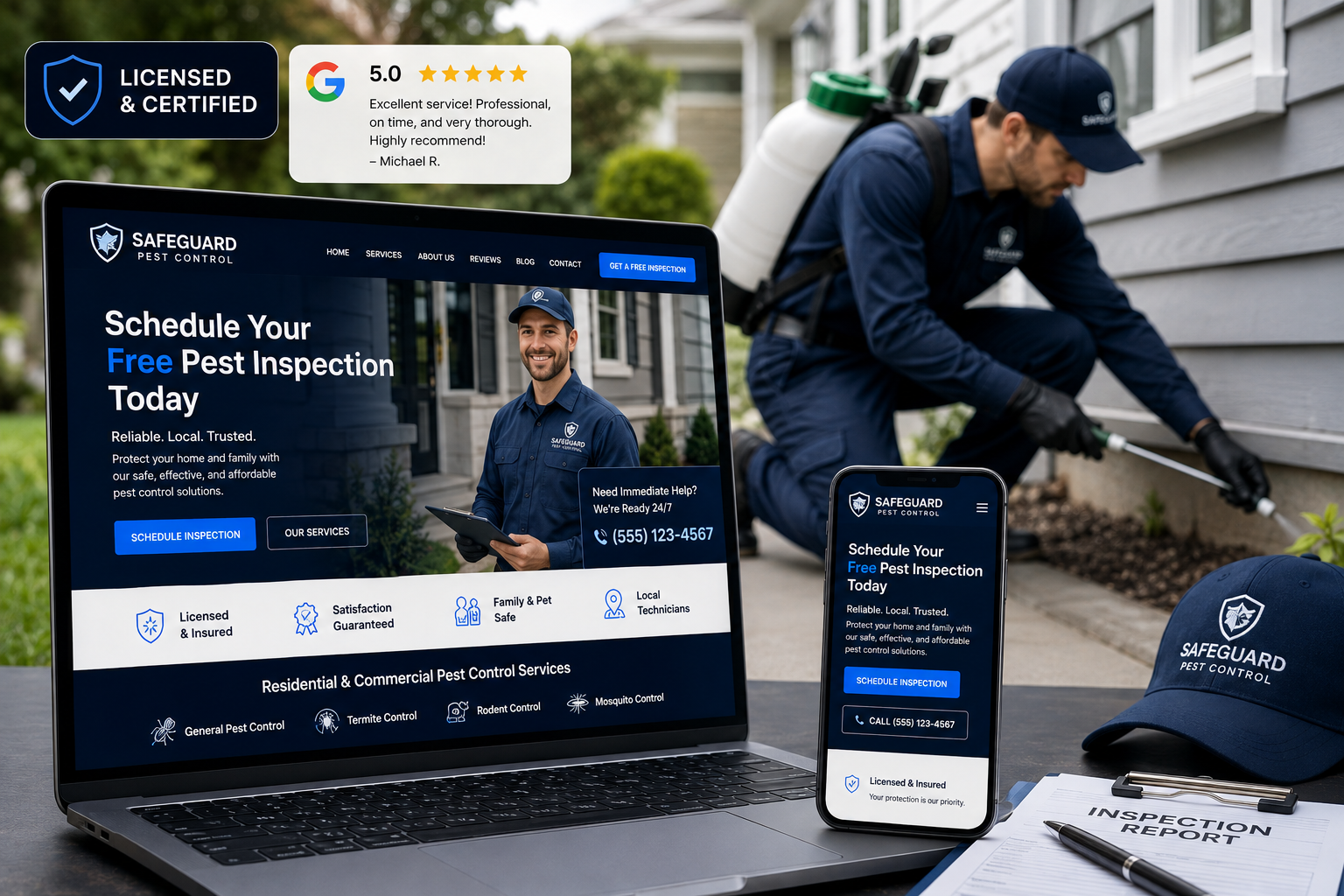
From a sudden bed bug scare to a routine termite inspection, homeowners searching for pest control want fast answers and instant trust. Here's what actually makes a pest control website rank and convert those searches into booked treatments, and how Webotixs builds that.
Nobody Browses Pest Control Websites for Fun — They Want Answers Fast
People don't visit a pest control website out of curiosity. They land there because they found something crawling in the kitchen, spotted termite damage, or want a preventative treatment plan before a problem starts — and every one of those visitors wants the same three things almost instantly: what services are offered, whether this company can be trusted, and how fast they can book. If your website makes them dig for any of that, they'll bounce to a competitor within seconds.
At Webotixs, we build websites specifically for pest control companies, designed around exactly this kind of fast, decision-focused visitor. Here's what that actually takes.
1. Build Separate Pages for Each Pest and Service, Not One Generic Page
Pest control searches are highly specific — someone dealing with bed bugs searches completely differently than someone dealing with termites or a rodent problem, and each of those searches carries different urgency and different questions. Companies that create dedicated pages for each pest type consistently rank for more of these specific, long-tail searches than companies relying on a single "Services" page to cover everything.
Your pest control website needs:
Dedicated pages per pest and service — termite treatment, bed bug extermination, rodent control, mosquito treatment, general pest prevention plans, and commercial pest control — each speaking directly to that specific problem.
Service-area pages for every city or neighborhood you cover, since local searches like "pest control in [city]" and "exterminator near me" drive the bulk of how customers find providers.
A fully optimized, claimed Google Business Profile, with consistent name, address, and phone number matched across your website and directory listings — inconsistent details quietly undermine local rankings.
2. Fast, Clean, Mobile-First Design
Most visitors arrive with a specific goal already in mind — check services, read reviews, or book an inspection — not to casually browse. A simple, uncluttered layout with clear navigation and prominent buttons reduces the friction that causes visitors to leave before converting. Combined with fast load times, this directly affects both user experience and how well the site ranks, since page speed remains a meaningful Google ranking factor.
3. Build Trust Immediately — Pest Control Is a Personal, In-Home Service
Letting a pest control technician into your home or business requires real trust, and that trust needs to be established before the visitor even picks up the phone:
Licensing, certifications, and years of experience displayed clearly, not buried deep in an About page
Real technician and service photos, not generic stock imagery of bugs
Google reviews and ratings shown prominently — companies maintaining strong review averages consistently convert better, and reviews remain one of the most influential local SEO signals
Clear information about treatment methods, safety for children and pets, and any guarantees offered
4. Every Page Should Push Toward a Booked Inspection or Treatment
A pest control website should function as a lead-generation tool around the clock, not a static brochure. That means:
Click-to-call buttons and simple contact forms placed strategically throughout the site, not just on a single contact page
Clear, prominent calls-to-action like "Schedule a Free Inspection" repeated naturally across service pages
A straightforward path to book — long, complicated forms lose leads, especially from visitors dealing with an active pest problem
Where relevant, separated paths for emergency-style requests (active infestations) versus routine or preventative service inquiries
5. SEO and Paid Ads Work Best as a Long-Term Combination
Organic SEO is a long-term investment — optimized service pages, consistent local content, and strong reviews compound over time into a steady, lower-cost stream of leads. Paid advertising, like Google Ads, complements this by capturing demand right now from people actively searching, and works especially well layered on top of an already-solid organic foundation rather than replacing it entirely. Companies that rely on paid ads alone without ever building organic rankings tend to stay fully dependent on ad spend, with traffic disappearing the moment the budget pauses.
Ongoing SEO work for pest control companies includes:
Regularly published, pest-specific and location-specific content
Fresh reviews and updated service-area pages as your business grows
Technical maintenance — page speed, mobile usability, and schema markup (including LocalBusiness and service schema)
Local citations and directory listings with consistent business information
Why Pest Control Companies Choose Webotixs
We build websites specifically for contractors and home service businesses, not recycled small-business templates. With Webotixs, you get:
A custom-designed pest control website built around your actual services, pests treated, and service areas
Local SEO built in from day one, targeting the exact searches your real customers use
Clean, mobile-first design built to convert fast, decision-focused visitors
Ongoing support so your site keeps ranking and generating booked inspections well after launch
Whether you're a residential pest control company trying to dominate local search, or an established provider whose current website simply isn't converting visitors into bookings anymore, Webotixs builds the site that gets found — and gets the inspections scheduled.
Frequently Asked Questions
How much does a pest control website cost?
A professional, custom-built pest control website typically ranges from $2,500 to $10,000+, depending on the number of service and location pages, booking functionality, and features like live chat. Cheaper DIY builders usually skip proper local SEO setup, which costs far more in lost leads over time.
How long does it take for a pest control website to start ranking?
Most pest control websites see meaningful movement in local search results within 3 to 6 months, depending on competition in your market, your Google Business Profile setup, and how consistently new content and reviews are added.
Should I create a separate page for every type of pest I treat?
Yes. Pest-specific pages — like a dedicated termite treatment page or bed bug extermination page — let you rank for the specific, high-intent searches homeowners use, rather than competing weakly across all of them with one generic services page.
Is SEO or paid advertising better for pest control lead generation?
Both work well together. Organic SEO builds a durable, lower-cost lead pipeline over time, while paid ads capture immediate demand from active searchers. Businesses that build organic first and layer in paid advertising tend to see the strongest, most sustainable results.
Does Webotixs provide SEO support after the website launches?
Yes. We offer ongoing SEO support — content updates, technical maintenance, and local optimization — so your pest control website keeps ranking and generating booked inspections long after launch, not just in the first few months.